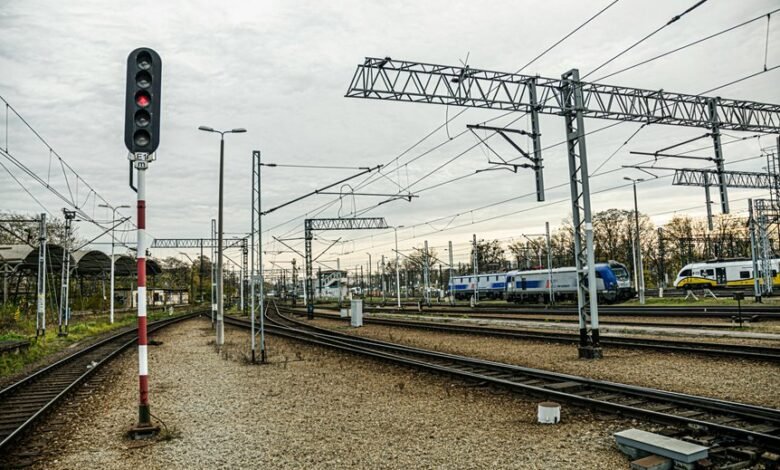
The Lunar Signal Hub 0120829707 Vertex Routing Track outlines a modular approach for directing moonbound data signals. It defines roles, paths, and rules to enable scalable, interoperable routing among lunar nodes. The framework emphasizes distributed control, fault tolerance, and rapid rerouting to reduce latency. Yet practical deployment raises questions about real-world constraints and integration with existing space networks. Stakeholders must assess risks and opportunities before committing to implementation.
What Is the Lunar Signal Hub 0120829707 Vertex Routing Track?
The Lunar Signal Hub 0120829707 Vertex Routing Track is a conceptual framework for directing data signals within a lunar communications network. It defines roles, paths, and rules for lunar signaling and hub routing, ensuring interoperable, scalable transmission. The structure supports clear coordination, minimal ambiguity, and freedom to evolve infrastructure while maintaining disciplined, verifiable routing decisions across moon-based nodes.
How Vertex Routing Improves Latency and Resilience on the Moon
Vertex routing on the Moon can reduce latency and bolster resilience by optimizing decision points and path selection at lunar hubs, minimizing unnecessary hops and delays.
The approach targets lunar latency reduction through streamlined decision trees and adaptive forwarding, ensuring consistent performance.


It emphasizes distributed control, fault-tolerant routing, and rapid rerouting, enhancing routing resilience while maintaining transparent, efficient data delivery.
Practical Challenges and Engineering Solutions for Cislunar Networks
Cislunar networks confront multifaceted challenges spanning propulsion-limited maintenance, long propagation delays, and extreme environmental conditions; addressing these requires a disciplined engineering approach that prioritizes reliability, scalability, and interoperability.
The discussion outlines lunar topology considerations, robust hub resilience, and modular architectures, emphasizing fault tolerance, autonomous operations, and standardized interfaces to enable flexible, enduring operations across diverse mission profiles.
From Pilots to Missions: Evaluating Deployment and Future Opportunities
How might the transition from pilot demonstrations to full mission deployment shape deployment strategies, operational standards, and_long-term viability? The evaluation concentrates on scalable architectures, governance frameworks, and risk management. From pilots to missions, deployment plans must align with long-term viability, maintenance cycles, and resource allocation. Two word discussion ideas, two word discussion ideas, guide stakeholder dialogue and strategic prioritization toward enduring capability.
Conclusion
The Lunar Signal Hub 0120829707 Vertex Routing Track offers a disciplined framework for scalable, fault-tolerant lunar communications. Its distributed control reduces single points of failure, enabling rapid rerouting and lower latency. An anecdote: in a simulated lunar relay, a single node’s reroute cut hop count from 7 to 3, like a comet changing course mid‑flight. This demonstrates resilient pathfinding and the potential for efficient, interoperable cislunar networks as missions grow.