If you own an inground pool, you already know the drill: skimming leaves, brushing walls, vacuuming the floor, and somehow still finding debris floating the next morning. Manual pool cleaning eats up weekends and tests your patience, especially during peak swimming season when you’d rather be enjoying the water than maintaining it. The good news is that automatic pool cleaners have evolved dramatically, offering hands-off solutions that keep your pool sparkling with minimal effort. The bad news? Walking into this market can feel overwhelming. Dozens of models, three distinct technologies, and price tags ranging from modest to eye-watering make the decision anything but straightforward. This article is designed specifically for homeowners who want to spend wisely—not just cheaply. You’ll walk away with a clear framework covering the types of cleaners available, how to evaluate true long-term costs rather than just sticker prices, and which features actually matter for your specific pool. By the end, you’ll have everything you need to make a confident, informed purchase that pays for itself over time.
Understanding Your Options: A Pool Cleaner Comparison
Before diving into specific models or brands, you need to understand the fundamental technology behind each type of automatic pool cleaner for inground pools. Every inground pool cleaner falls into one of three categories: suction-side, pressure-side, or robotic. Each operates on entirely different principles, connects to your pool system differently, and delivers distinct cleaning results. The right category for you depends on your existing pool equipment, the type of debris you battle most, and how much involvement you want in the process. Let’s break each one down so you can narrow your search before ever looking at a product page.
Suction-Side Pool Cleaners
Suction-side cleaners connect directly to your pool’s existing skimmer or a dedicated suction line, harnessing the power of your filtration pump to move around the pool floor. As the pump draws water through the cleaner, it creates suction that picks up debris and sends it into your pool’s main filter or pump basket. This is the simplest technology of the three—there’s no separate motor, no onboard computer, and very few moving parts. For homeowners who already have a reliable filtration system running daily, suction-side cleaners represent the most affordable entry point into automatic cleaning. However, they come with trade-offs. Because they rely entirely on your existing pump, they add strain to your filtration system and can reduce its lifespan over time. They tend to move more slowly across the pool floor, and fine particles like sand or pollen may pass through if your filter isn’t rated to catch them. They’re best suited for pools with moderate debris loads and owners who don’t mind occasionally emptying a fuller-than-usual pump basket.
Pressure-Side Pool Cleaners
Pressure-side cleaners work in reverse compared to suction models—instead of pulling debris in, they use pressurized water jets to propel themselves and sweep debris into a dedicated filter bag attached to the unit. They connect to your pool’s return line or, in many setups, require a separate booster pump installed at your equipment pad. The onboard filter bag is a significant advantage: it captures leaves, twigs, and larger debris before they ever reach your main filtration system, reducing wear on your pool’s pump and filter. This makes pressure-side cleaners particularly effective for pools surrounded by trees or landscaping that sheds heavily. The downside is cost complexity. If your pool wasn’t plumbed with a dedicated pressure line, you’ll need a booster pump installed, which adds to both the upfront investment and ongoing energy costs. They also tend to handle fine debris less effectively than other options, since the bag mesh must be large enough to allow water flow.


Robotic Pool Cleaners
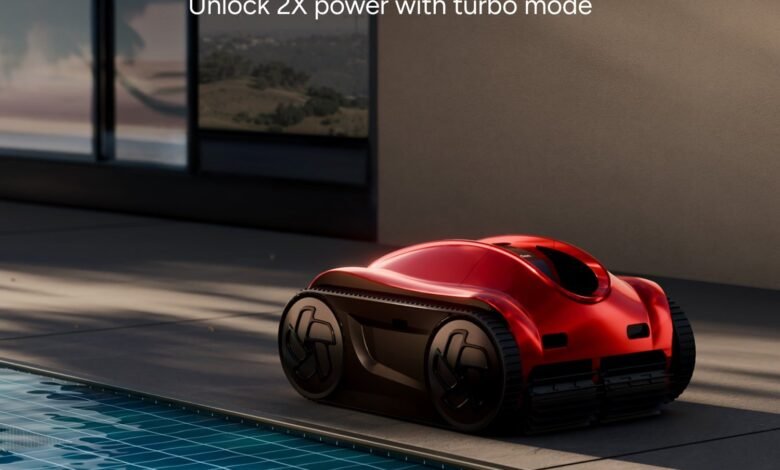
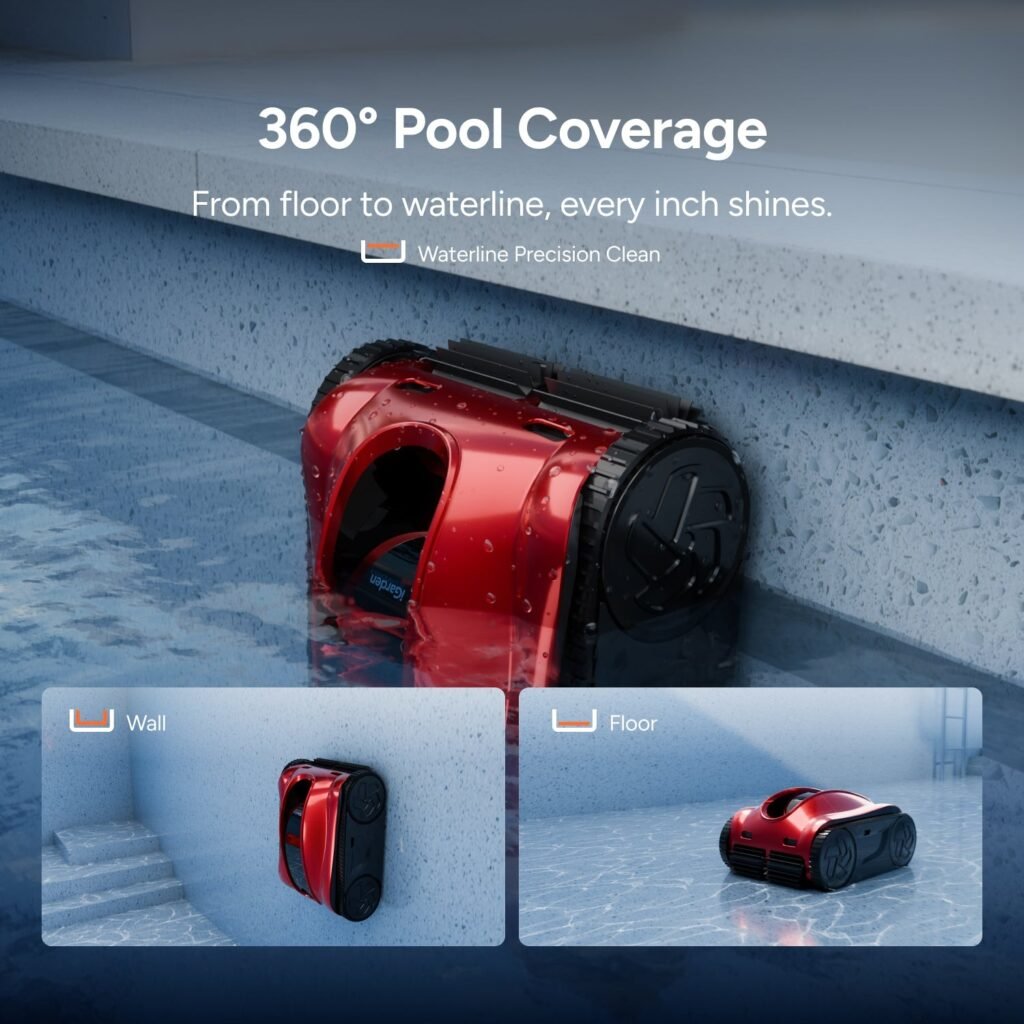
Robotic pool cleaners are completely self-contained units that operate independently from your pool’s plumbing and filtration system. You simply plug the power supply into a standard outdoor electrical outlet, drop the unit into the water, and it handles everything on its own—pumping, filtering, scrubbing, and navigating. Inside the unit, a dedicated motor drives the wheels or tracks while a separate pump pulls water through an internal filter cartridge or bag, trapping debris of all sizes. Many robotic models climb walls, scrub the waterline, and use intelligent navigation algorithms to ensure complete coverage rather than wandering randomly. They’re the most energy-efficient option because they use low-voltage motors instead of running your pool’s high-horsepower pump. The primary barrier is the upfront investment, which is notably higher than the other two categories. However, for homeowners who value thorough, consistent cleaning with minimal impact on existing equipment, robotic cleaners often deliver the strongest overall value proposition—a point we’ll examine closely in the next section.
Evaluating Cost-Effective Pool Maintenance
The sticker price on a box tells you almost nothing about what a pool cleaner will actually cost you over its lifetime. Budget-conscious homeowners who focus exclusively on the initial purchase often end up spending more within three to five years than those who invested more upfront. To make a genuinely smart decision, you need to think in terms of Total Cost of Ownership—a calculation that accounts for every dollar that flows out of your wallet from the day you buy the cleaner until the day you replace it.
Start with the initial purchase price as your baseline. Suction-side cleaners typically represent the lowest entry cost, followed by pressure-side models (especially if your pool already has a dedicated pressure line), with robotic cleaners commanding the highest upfront investment. But this ranking often inverts when you zoom out to a five-year horizon. Operational costs are where the differences become stark. Suction-side and pressure-side cleaners both require your pool’s main pump—or an additional booster pump—to run during their cleaning cycles. That means your pump runs longer each day, consuming more electricity. A typical pool pump draws between 1,500 and 2,500 watts per hour. Running it an extra two to three hours daily for cleaning adds meaningful cost to your monthly energy bill. Robotic cleaners, by contrast, operate on low-voltage motors that draw roughly 100 to 200 watts, making them dramatically cheaper to run per cleaning cycle.
Maintenance and repair costs add another layer. Suction-side cleaners have fewer parts to fail, but when your main pump or filter wears out prematurely from the added load, that replacement cost dwarfs any savings. Pressure-side models require periodic bag replacements and booster pump maintenance. Robotic cleaners need filter cartridge cleaning after each use and occasional brush or track replacements, but these consumables tend to be inexpensive individually. Warranty quality matters here too—a two-year comprehensive warranty on a robotic unit protects a larger investment, while a one-year warranty on a budget suction cleaner may leave you exposed sooner than expected.
Finally, consider lifespan. Suction-side cleaners typically last three to five years with consistent use. Pressure-side models often reach five to seven years. Quality robotic cleaners frequently deliver five to eight years of service, and because they don’t stress any other equipment, they don’t create hidden replacement costs elsewhere in your system. When you divide total five-year costs—purchase, energy, maintenance, and indirect equipment wear—by the number of effective cleaning cycles delivered, robotic cleaners frequently emerge as the lowest cost-per-clean option despite their higher initial price. The framework is straightforward: add up every anticipated expense over your expected ownership period, then compare that total across categories. The answer may surprise you.
See also: Why Hiring an Interior Design Studio Can Elevate Your Home
Identifying Essential Pool Cleaning Features for Your Needs
Once you’ve settled on a category and understood the true cost picture, the next step is matching specific features to your actual pool conditions and lifestyle. Not every feature marketed as “premium” will matter for your situation, and some capabilities that seem minor on paper turn out to be dealbreakers in daily use. The goal here is to build a personal checklist that separates genuine necessities from nice-to-haves, so you don’t overpay for technology you’ll never use—or underbuy and regret it within months.
Cleaning coverage is your first consideration. A cleaner that only handles the pool floor leaves walls and the waterline untouched, which means you’re still grabbing a brush every week. Wall-climbing ability depends on the drive mechanism—units with rubber tracks or textured wheels grip vertical surfaces far better than those with smooth wheels designed primarily for flat movement. If your pool has a steep transition from floor to wall or features tight corners, look for models specifically engineered to handle those geometries without getting stuck or losing traction.
Debris handling comes next, and this is where knowing your environment pays off. If your pool sits beneath mature trees, you need a cleaner with a large-capacity filter bag or basket that can handle leaves and twigs without clogging mid-cycle. If your primary battle is fine dust, pollen, or sand, you need a fine-mesh filtration cartridge capable of trapping particles down to two microns. Some models offer interchangeable filter media, letting you swap between coarse and fine options depending on the season—a genuinely useful feature for pools that face different debris challenges throughout the year.
Programmability determines how hands-off your experience actually becomes. Models with built-in timers let you schedule cleaning cycles during off-peak electricity hours or ensure the pool is pristine before your weekend guests arrive. Cycle memory means the cleaner remembers your preferred settings between uses, eliminating repetitive setup. Some advanced units connect to smartphone apps for remote scheduling and status monitoring—a feature that integrates well with broader smart home ecosystems like those offered by iGarden—which is convenient but not essential for everyone. Ease of use encompasses everything that happens when the cleaning cycle ends: how heavy the unit is to lift from the water, whether the filter is simple to access and rinse, how the cord stores without tangling, and whether a wheeled caddy is included for transport and storage. These details sound trivial until you’re wrestling a waterlogged machine out of the pool three times a week.
Prioritizing these features depends on your specific scenario. Homeowners surrounded by heavy foliage should weight debris capacity and large-object handling above all else. Those with pristine surroundings but persistent fine dust need superior filtration. Busy professionals who want zero daily involvement should prioritize programmability and easy maintenance. Matching features to your reality—rather than chasing the longest spec sheet—is what separates a satisfying purchase from an expensive disappointment.
Feature Deep-Dive: Smart Navigation vs. Random Patterns
The way a pool cleaner moves through your pool directly affects how well it cleans and how long each cycle takes. Budget models typically use random navigation—bouncing off walls and changing direction unpredictably, eventually covering most of the pool surface through sheer persistence. This approach works, but it’s inefficient. Random-pattern cleaners often miss spots entirely during shorter cycles or redundantly clean the same areas multiple times, wasting energy and extending the time needed for complete coverage. For simple rectangular pools, random movement may eventually get the job done within a reasonable timeframe. But for pools with irregular shapes, built-in steps, benches, or alcoves, random patterns leave dead zones that accumulate debris over time.
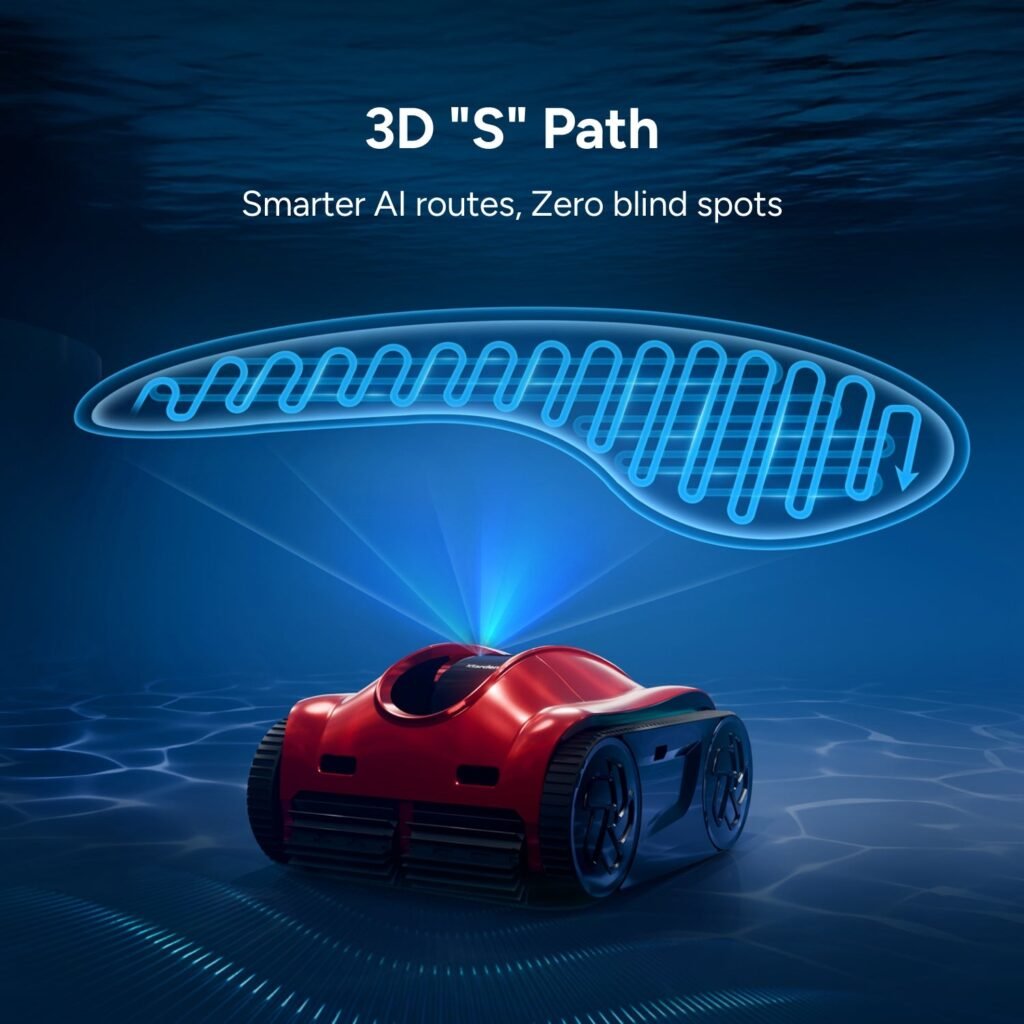
Smart navigation systems represent a fundamentally different approach. These units use onboard gyroscopes, accelerometers, or even ceiling-facing cameras to map your pool’s dimensions during their first few cycles. Once mapped, they execute systematic cleaning paths—typically in parallel lines or expanding spirals—that guarantee complete floor and wall coverage in the shortest possible time. The practical impact is significant: a smart-navigation cleaner might finish a thorough cycle in ninety minutes while a random-pattern unit needs three hours or more to achieve comparable results. That translates directly into lower energy consumption per clean, less wear on the unit’s motor and brushes, and a pool that’s ready faster. If your pool has any complexity in its shape or if you value efficiency, smart navigation isn’t a luxury—it’s a feature that pays for itself through reduced run time and more consistent results.
Your Pool’s Specifics: Matching a Cleaner to Your Setup
Before making a final decision, run through a practical compatibility checklist that accounts for your pool’s unique characteristics. Start with your pool surface material. Plaster and concrete pools can handle aggressive scrubbing brushes without damage, while vinyl-lined pools require softer brushes or foam rollers that won’t tear or scratch the liner. Fiberglass and tile surfaces fall somewhere in between, but tile grout lines benefit from active scrubbing action that dislodges algae buildup. Choosing a cleaner with the wrong brush type risks either damaging your surface or delivering inadequate cleaning.
Pool size and shape matter enormously for practical performance. Larger pools demand cleaners with longer power cords or hoses—running short means the unit can’t reach far corners, creating permanently dirty zones. Complex shapes with L-configurations, kidney curves, or attached spas need cleaners with proven ability to navigate tight transitions without becoming trapped. Check the manufacturer’s maximum pool size rating and compare it against your actual square footage, adding a buffer for irregularities.
Your primary debris type should guide your filtration choice. Identify whether you’re mostly battling large organic matter like leaves and seed pods, fine particulates like sand and silt, or a seasonal mix of both. Match this to the cleaner’s filter specifications—mesh size, basket volume, and ease of mid-cycle emptying all factor in. Finally, assess your practical setup: the distance from an outdoor GFCI outlet to the pool’s edge for robotic models, or the condition of your existing plumbing connections for suction and pressure-side units. A cleaner that’s technically perfect but physically incompatible with your infrastructure helps no one. Walking through these specifics before purchasing eliminates the most common sources of buyer’s remorse and ensures your investment performs exactly as expected from day one.
Matching the Right Cleaner to Your Pool and Budget
Choosing the right automatic pool cleaner comes down to three pillars: selecting the type that aligns with your existing equipment and cleaning demands, evaluating the true long-term cost rather than fixating on the purchase price alone, and matching specific features to your pool’s unique characteristics and your personal maintenance preferences. There’s no universal “best” cleaner—only the best cleaner for your situation. A homeowner with heavy leaf fall and an existing booster pump has entirely different needs than someone with a pristine vinyl-lined pool who simply wants set-it-and-forget-it convenience.
Before you start browsing product pages, revisit your personal checklist: your pool’s surface type, shape, and size; your dominant debris challenges; your tolerance for hands-on involvement; and your honest five-year budget. With these answers clearly defined, you’re no longer a confused shopper overwhelmed by marketing claims—you’re an informed buyer who knows exactly what to look for. Go find the cleaner that earns its place in your pool, and reclaim your weekends for swimming instead of scrubbing.