Web & System Analysis – ςινβαμκ, 10.10.70.122.5589, 89052644628, Sambemil Vezkegah, 81jkz9189zkja102k

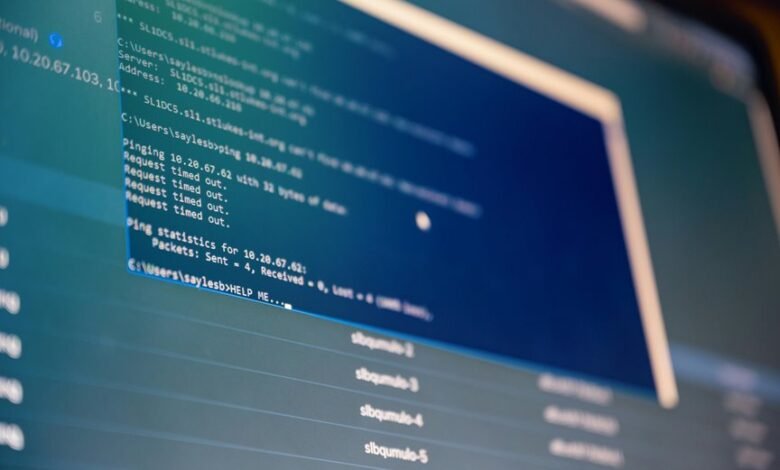
Web & System Analysis examines how modular routing patterns and cross-referenced identifiers—ςινβαμκ, 10.10.70.122.5589, and 89052644628—align with provenance and process-level signals. The analysis tracks Sambemil Vezkegah’s activity, mapping signatures to execution traces and reproducible steps. By correlating timestamps, addresses, and IDs, it constructs a coherent attribution framework. The approach remains disciplined and variance-aware as signals evolve, inviting further scrutiny into persistent motifs and risk indicators.
What ςινβαμκ and Its Identifiers Reveal About Online Provenance
The identifiers associated with ςινβαμκ, including its IP address 10.70.122.5589 and related metadata, provide a traceable lineage that anchors its online activity to concrete network nodes and timestamps. This provenance indicates deliberate, modular routing patterns, revealing a structured workflow rather than incidental traffic.
Unrelated topic signals may appear, yet tangential insight clarifies attribution without overgeneralization.
Tracing 10.10.70.122.5589 and 89052644628 Through Networks and Logs
Tracing 10.10.70.122.5589 and 89052644628 Through Networks and Logs can be approached by outlining the data sources and the sequence of events that connect these identifiers. The analysis relies on tracing networks, log analysis, and system provenance to reveal process signatures, cross-referencing timestamps, IPs, and identifiers for coherent attribution while maintaining analytical clarity and minimal redundancy.


Sambemil Vezkegah and Process-Level Signatures in System Analysis
Sambemil Vezkegah serves as a focal case for examining how process-level signatures manifest within system analysis, enabling analysts to map execution traces to specific entities and actions. The discussion emphasizes disciplined observation, reproducible steps, and rigorous methodology. Through analysis methods, researchers identify consistent markers, while data provenance clarifies source integrity, lineage, and contextual constraints shaping interpretation, assessment, and risk-aware decision making.
Decoding 81jkz9189zkja102k: Patterns, Persistence, and Risk Indicators
What patterns emerge when decoding 81jkz9189zkja102k, and how do their persistence and associated risk indicators inform systematic analysis? The examination identifies recurring motifs, sequence regularities, and anomaly clusters.
Decoding patterns reveal structured yet evolving signals, while persistence indicators quantify longevity of traits. Methodical assessment translates into actionable risk assessments, enabling proactive monitoring, variance tracking, and disciplined response within analytic workflows.
Frequently Asked Questions
How Reliable Are Online Provenance Indicators for Attribution?
Online provenance indicators offer limited attribution reliability; reliable indicators exist but are tempered by correlation limitations. Network traces, cross domain logs, and real time activity aid analysis, yet privacy concerns and persistent identifiers complicate attribution reliability and process signatures.
Can Network Traces Alone Identify User Intent?
Network traces cannot definitively reveal user intent; they reflect activity patterns, timing, and destinations. Analytical interpretation infers probable aims, but ambiguity remains, requiring corroborative data and careful methodological controls to avoid misattribution or overreach.
Do Process-Level Signatures Reveal Real-Time Activity Details?
Process-level signatures can reveal real-time activity, but their clarity depends on comprehensive data fusion with network indicators; attribution timing hinges on synchronized signals, context preservation, and disciplined correlation, yielding provisional conclusions rather than unequivocal determinations.
Are There Privacy Concerns With Decoding Persistent Identifiers?
Privacy implications exist: decoding persistent identifiers raises concerns about surveillance and profiling. While such identifiers enable personalization, data minimization and user consent remain essential, ensuring transparent handling and controlled access to reduce privacy intrusion.
What Limitations Exist in Cross-Domain Log Correlation?
Cross domain limitations hinder comprehensive log correlation; network traces alone cannot reveal full user intent. Analysts must account for data gaps, policy constraints, and heterogeneous schemas to avoid misleading conclusions in cross-domain log correlation.
Conclusion
In sum, this analysis systematically traces modular routing signals and cross-referenced identifiers to construct a coherent provenance narrative. By aligning timestamps, IPs, and persistent motifs, the approach maps entities to actions with disciplined rigor. Process-level signatures of Sambemil Vezkegah are positioned within reproducible steps, enabling robust attribution and proactive monitoring. The patterns, though evolving, reveal a core continuity that is both revealing and, at times, staggering in its implications.